

SANDBLASTING
A brief rundown on the different styles of media blasting
THREE POWERFUL BLASTING TECHNIQUES
Sand blasting, soda blasting, and dustless blasting are three distinct methods of abrasive cleaning or surface preparation, each with unique characteristics and applications:
SAND BLASTING
-
Sand blasting, also known as abrasive blasting or grit blasting, uses fine sand particles as the abrasive material. There are many types of media such as crushed glass, silica sand (which we don't use) coal slag, garnet crushed walnut, and corn cob which. While walnut and corn cob are usually used in log home restorations they can also be used in automotive restorations as they are softer and a little less abrasive. Using coal slag and garnet are used on steel and harder substrates. Plastic media, while its not so common is another option for delicate surfaces.
-
It is highly effective in removing rust, paint, and corrosion from a variety of different surfaces such as wood, steel, and concrete.
-
Sand blasting is known to be quite aggressive but with the right experience, media, and machinery, it can become quite delicate and is suitable for heavy-duty applications, such as industrial machinery or large metal structures, but also can be delicate for very fragile substrates with thin metals and wood. With the right media, pressure, and feed rate there's not many projects we can't handle.
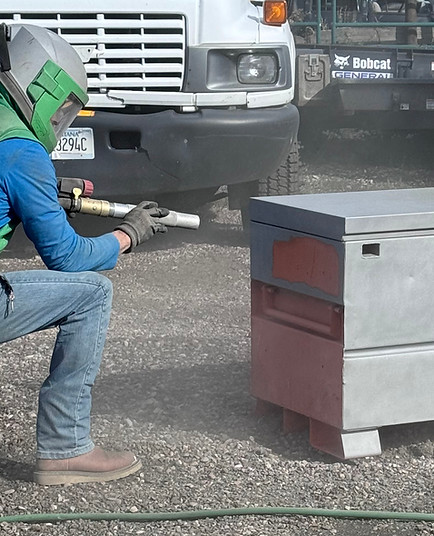
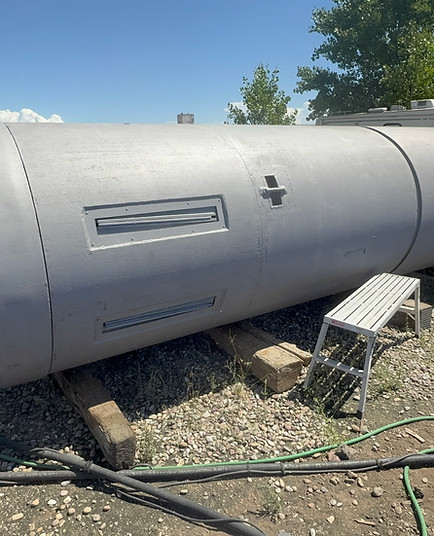
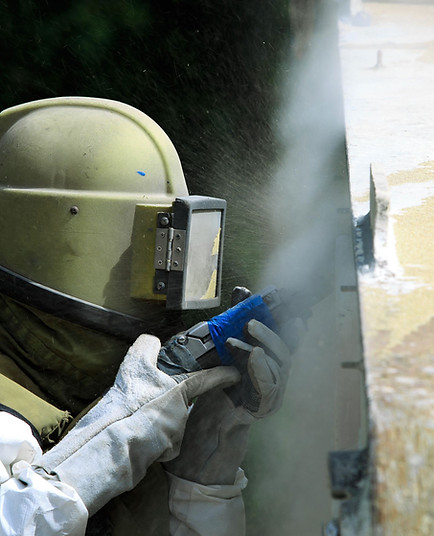
In summary, the key differences between these methods lie in the type of abrasive material used and their applications. Sand blasting is more aggressive and produces dust, soda blasting is gentler and eco-friendly, while dustless blasting combines the advantages of abrasive blasting with reduced dust and heat generation. The choice of method depends on the specific surface and cleaning requirements.
OUR SANDBLASTING SOLUTIONS

INDUSTRIAL SANDBLASTING
Our industrial sandblasting services are designed for heavy-duty surface preparation in factories, plants, and large structures. We effectively remove rust, old coatings, and contaminants, creating a clean and smooth surface ready for long-lasting protective coatings and industrial finishes.


